
Less buried trash
Every tonne the plant takes is a tonne less in a landfill that’s already overflowing.
Orchidean One · Costa Rica
Costa Rica is running out of places to put its trash. Orchidean One turns it into electricity, with technology proven around the world and air quality measured in plain sight.
The problem
Almost everything we throw away ends up buried. The Central Valley’s landfills are filling up, trucks travel farther every year and municipalities pay more and more. 5
Understand the crisisThe solution
Orchidean One takes the trash we bury today and turns it into electricity for the national grid. It’s a waste-to-energy plant — the same kind the world’s cleanest cities rely on.
* Design estimate, to be confirmed by engineering studies.
Meet Orchidean OneHow it works
Closed trucks unload inside a sealed building.
Above 850 °C, waste turns into heat.
Heat makes steam, steam spins a turbine.
Gases go through several cleaning stages before leaving.
Waste shrinks to about one tenth of its volume.
Why it matters
Every tonne the plant takes is a tonne less in a landfill that’s already overflowing.
In 2024 there were blackouts and ICE spent hundreds of millions of dollars on fuel and imports. Trash is produced every day, rain or shine. 6
Waste is almost 15% of the country’s greenhouse gas emissions. What isn’t buried doesn’t rot or release methane. 7
Fewer landfills means less leachate — the liquid rotting trash releases, which threatens rivers and aquifers.
Treating trash near where it’s produced avoids trips of hundreds of kilometers, traffic and fuel.
Around 1,000 jobs during construction and some 150 permanent technical jobs.*
* Design estimate.
Not an experiment
There are more than 3,000 plants like this worldwide. Many sit in the heart of the planet’s cleanest, wealthiest cities. 8
Copenhagen, Denmark
CopenHill opened in 2017 inside the city. Its roof is a ski slope and hiking trail. In 2023 it powered about 94,000 households and heated 87,000 apartments. 9
Vienna, Austria
The Spittelau plant, decorated by artist Hundertwasser, has run inside Vienna for over 50 years and heats more than 60,000 households. 10
Tokyo, Japan
Tokyo’s 23 wards — one of the cleanest cities on Earth — have 21 plants. Japan has around 1,000. 11
Sweden
Sweden barely landfills household waste: about half becomes energy. It’s so efficient it imports waste from other countries. 12
Switzerland
Since 2000, Switzerland has banned landfilling combustible waste. About 30 plants turn it into energy. 13
Singapore
An island with no room for landfills. Its plants cut waste volume by about 90%, and the ash goes to an offshore landfill. 14
And it doesn’t compete with recycling: Germany runs dozens of plants and still recycles or composts 69% of its municipal waste. 15
See examples worldwideAir & health
Every industry has emissions. The right question is: compared to what? Today trash already pollutes — in landfills, rivers and backyard burning — and nobody measures it.
Orchidean One treats its gases in several stages, is designed to meet European Union limits — among the strictest in the world — and publishes its readings on this site. 16
Today, with landfills
With Orchidean One
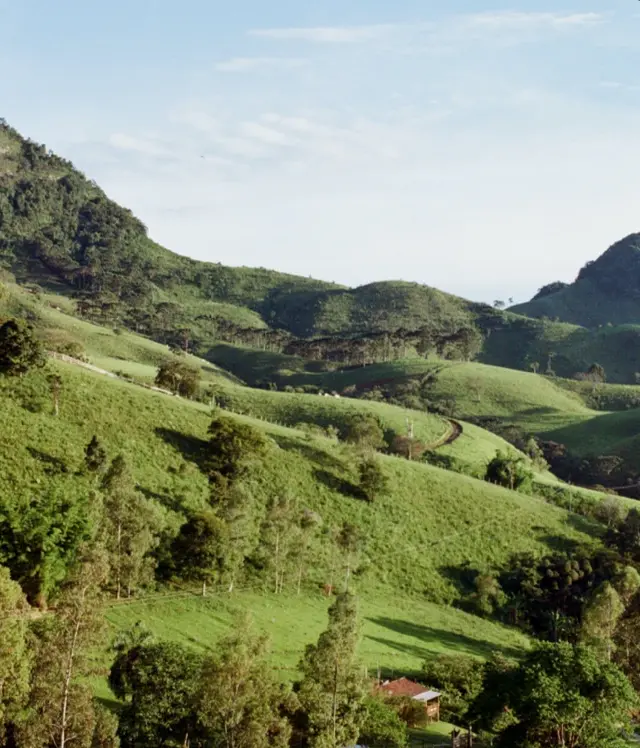
The name
After the orchid, Costa Rica’s flower. The guaria morada is our national flower.
The orchid isn’t a parasite: it lives on the tree without taking anything from it, and makes use of what the forest lets pass by. That’s the idea behind Orchidean One: take what the country already threw away and give it back as something useful.
A plant for a green country.
Where and when
Nothing needs inventing. The design already runs in hundreds of plants; here it’s adapted to our waste and our laws.
Site, permits and timeline* Design estimate, subject to studies and permits (SETENA and municipality).
Every industry has emissions, and we won’t pretend otherwise. What matters is how much, compared to what, and who controls it.
Today, trash already pollutes: landfills release methane and leachate, and in many backyards trash is burned with no control at all. Orchidean One treats its gases in several stages before release, is designed to meet European Union limits — among the strictest in the world — and publishes its readings. See the full answer.
No. Trash arrives in closed trucks and is unloaded inside a sealed building. The air inside is drawn into the furnace: odors don’t escape, they get burned. That’s why plants like these operate in the middle of Vienna, Copenhagen and Tokyo.
No. Recycling and composting come first; the plant takes what has no other use and is buried today. That’s exactly what Costa Rica’s Law 8839 sets out: avoid, reduce, reuse, recover… and bury only as a last resort.
The countries that recycle most also use these plants: Germany recycles or composts 69% of its municipal waste and turns much of the rest into energy.
The site is chosen through technical studies and public consultation. The criteria: an industrial or compatible zone under the local zoning plan, away from homes, outside protected areas and aquifer recharge zones, close to main highways and an electrical substation. See the criteria and timeline.
Stay in the loop
Progress, public consultation dates and answers to your questions. No spam.
One informed person is worth a thousand rumors. Send this link to your family, your neighborhood group or your local council.